

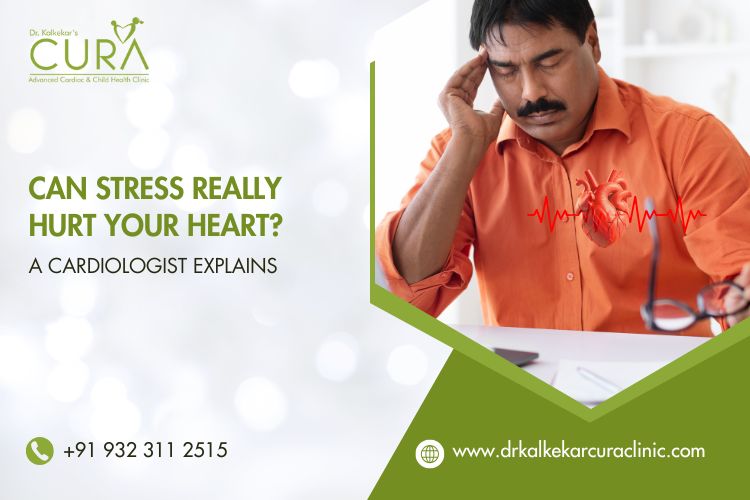
Can Stress Really Hurt Your Heart? A Cardiologist Explains
Let’s face it, stress is something we all deal with. Whether it’s deadlines, traffic, or personal matters, stress creeps in and overstays its welcome. But what if it’s doing more harm than just making you feel overwhelmed? What if it’s actually affecting your heart?
If you’re someone who constantly feels like you’re running on fumes, it might be time to look deeper. And if you're from Seawoods, we at Dr. Kalkekar's Cura Clinic are here to help you understand how serious this really is. As your trusted cardiovascular doctor in Seawoods, our focus isn’t just treating your heart, but helping you protect it before something goes wrong.
Why Stress and the Heart Don’t Get Along?
Stress, particularly chronic stress, isn’t just a mental burden. It activates a full-body alert system known as the “fight or flight” response. Your brain signals the adrenal glands to release a rush of hormones like adrenaline and cortisol. While this is useful in short bursts (like running away from danger), a constantly active stress response becomes toxic.
Here's how it plays out:
- Your heart rate increases
- Your blood pressure rises
- Blood vessels constrict
- Inflammation ramps up
- Blood sugar levels spike
Do this over and over again, every day, and it puts your heart at risk. That’s how stress creates a dangerous environment inside your body.
Signs Stress Is Affecting Your Heart
You may not even realize your heart is screaming for help until it’s too late. So, how do you know if stress is taking a toll on your heart?
Some warning signs include:
- Rapid or irregular heartbeat
- Chest pain or tightness (especially during emotional moments)
- Increased fatigue or exhaustion
- Shortness of breath with little activity
- Dizziness or lightheadedness
- Trouble sleeping or waking up tired
If you’re experiencing any of these, it’s time to take them seriously.
Can You Get a Heart Attack from Stress and Anxiety?
Yes, unfortunately, it’s possible. Emotional stress is a well-documented trigger for heart attacks. There’s even a condition called “stress cardiomyopathy,” or “broken heart syndrome,” where sudden stress causes heart muscle weakness, mimicking a heart attack.
High cortisol levels can increase plaque buildup in arteries. Over time, this can rupture, leading to clot formation and eventually—yes—a full-blown heart attack. Add pre-existing risks like smoking, high BP, or diabetes, and the danger multiplies.
Can Stress Cause a Heart Attack in a Young Person?
Absolutely. Gone are the days when heart attacks were seen as an “old people’s” issue. Lifestyle factors have changed dramatically. Young people today face high-pressure careers, sedentary routines, poor diets, and digital burnout, all while juggling financial and personal responsibilities.
Combine that with insufficient sleep and lack of exercise, and you’ve got a dangerous mix. In fact, many cardiovascular doctors in Seawoods and other metros report seeing younger individuals walk in with heart issues that were once rare in their age group.
If you’re in your 20s or 30s and feel your heart racing, skipping beats, or experiencing chest tightness during stress, it’s not “just in your head.” It’s worth getting evaluated.
How Does Stress Affect the Heart and Blood Vessels?
Let’s break this down a little deeper. Here’s what goes on inside your body:
- Increased Blood Pressure: Stress causes narrowing of arteries and raises your blood pressure, which strains the heart over time.
- Inflammation: Chronic stress triggers low-grade inflammation, a known culprit in heart disease.
- Higher Blood Sugar: Cortisol causes glucose spikes, increasing your chances of diabetes, a major heart disease risk factor.
- Blood Clot Risk: Stress affects platelet activity, making your blood more likely to clot, which can block arteries.
- Impaired Healing: It also delays the repair of damaged blood vessels, making things worse with time.
When Should You See a Cardiologist for Stress Symptoms?
If you’ve been brushing off symptoms like racing heartbeat, occasional chest pain, or extreme fatigue, don’t. Especially if they’re happening alongside stressful events or anxious moments.
If you're from Navi Mumbai or nearby, we at Dr. Kalkekar’s Cura Clinic offer consultations with an experienced cardiovascular doctor in Seawoods, focused on both prevention and treatment. Our advanced diagnostic tools and compassionate care can help you find the root of your symptoms.
What Makes Cura Clinic the Right Place to Start?
At Dr. Kalkekar’s Cura Clinic, we understand that health isn’t just about tests and machines; it’s also about how you feel. Stress and mental wellness are closely connected to your heart health. Our clinic brings together state-of-the-art cardiac diagnostics with personalized care.
From 2D Echo, ECG, and TMT to advanced angiography and even valve replacements, we’re equipped to handle all levels of care. Whether it’s a mild concern or a major one, you’ll be in expert hands.
Simple Lifestyle Changes That Protect Your Heart from Stress
The good news? You don’t need to overhaul your life completely to protect your heart. A few daily habits can help offset the effects of stress:
- Sleep well: Aim for 7–8 hours of sleep
- Move your body: Daily 30-minute walks or any physical activity
- Meditate or breathe deeply: Even 5–10 minutes a day makes a difference
- Reduce screen time: Especially before bedtime
- Talk it out: With a friend, family member, or counselor
- Get regular checkups: Don’t wait until symptoms get worse
FAQs About Stress and Heart Health
1. Can stress cause permanent heart damage?
Yes, prolonged stress can lead to structural and functional changes in the heart. This includes thickening of heart walls, plaque buildup in arteries, and decreased flexibility of blood vessels.
2. Is anxiety the same as stress when it comes to heart health?
Not exactly. While they share symptoms like a racing heart and chest tightness, anxiety disorders involve ongoing mental health issues. Both can negatively impact the heart, but their root causes and treatment paths differ.
3. How do I know if chest pain is from stress or a real heart issue?
It’s tricky, which is why you shouldn’t self-diagnose. If chest pain is severe, persistent, or radiates to the arms/jaw, seek immediate help. If it comes and goes with emotional changes, it might be stress, but always confirm with a specialist.
4. What tests should I take if I feel my heart is affected by stress?
Tests like ECG, 2D Echo, and TMT are commonly used. Based on your history, your cardiovascular doctor in Seawoods may also suggest stress tests or blood markers to evaluate inflammation and risk.
5. Can managing stress reverse heart issues?
In many cases, yes. Early-stage damage due to stress (like high BP or cholesterol) can be reversed or managed with lifestyle changes and medical guidance. The key is catching it early.
6. What is the cost of a cardiac consultation at Cura Clinic?
The cost of consultation depends on your case and the diagnostic tests recommended. At Dr. Kalkekar’s Cura Clinic, we believe in transparent and ethical pricing. Our team will guide you through the process based on your needs.
Final Thoughts
Stress is real. It’s invisible, silent, and powerful enough to impact your heart. But it’s not unbeatable. You can take control with a mix of awareness, lifestyle choices, and expert help.
If you’re concerned about your heart, don’t wait for things to get worse. If you're from Seawoods or the surrounding areas, we at Dr. Kalkekar’s Cura Clinic offer consultations with an experienced cardiovascular doctor in Seawoods. You’ll get more than just a checkup; you’ll get clarity, confidence, and care that’s tailored to your life.
Your heart deserves peace. Start with a conversation today.