

What Is Pacemaker Implantation?
When a parent or grandparent is told they need a pacemaker, the entire family starts searching. Is it really necessary? Is it dangerous at their age? Will they ever be the same again? These are the right questions, and they deserve straight answers from someone who has guided thousands of patients through exactly this decision.
Here's something worth knowing before anything else. In 1958, the first implanted pacemaker was the size of a tea coaster. Today, the most advanced version fits on the tip of a finger, sits inside the heart itself, and leaves no visible sign it was ever placed. No chest incision. No wires. No scar. The MICRA transcatheter pacemaker represents one of the most significant advances in cardiac care in decades, and in Navi Mumbai, Dr. Sanjeevkumar Kalkekar of Dr. Kalkekar's Cura Clinic is among the very few cardiologists in the country qualified to offer it.
Before we get to the technology, let's cover what actually brings someone to the point of needing pacemaker implantation in the first place.
When the Heart Forgets to Keep Track of Beats
The heart runs on electrical signals. These signals tell the heart when to contract, how fast to beat, and how to coordinate the chambers. When that electrical system is disrupted, the heart can beat too slowly, pause unexpectedly, or lose the coordination between its upper and lower chambers.
This condition is called bradycardia, meaning a slow heart rate, typically below 60 beats per minute, when it causes symptoms. A slow heart rate on its own isn't always dangerous. But when the slow heart rate causes dizziness, fainting, extreme fatigue, breathlessness, or confusion, it means the heart is not pumping enough blood to meet the body's demands.
Common causes of slow heart rate that may need treatment:
- Heart block: the electrical signal between the upper and lower chambers is delayed or completely blocked
- Sick sinus syndrome: the heart's natural pacemaker, the sinus node, isn't firing reliably
- Damage from a previous heart attack is affecting the electrical system
- Age-related degeneration of the conduction system
- Certain medications that slow the heart as a side effect
Heart block treatment and bradycardia treatment, in cases where the slow heart rate is causing symptoms or posing a risk, typically require pacemaker implantation. Medications cannot speed up a heart with a damaged electrical system the way a device can.
What a Pacemaker Actually Does
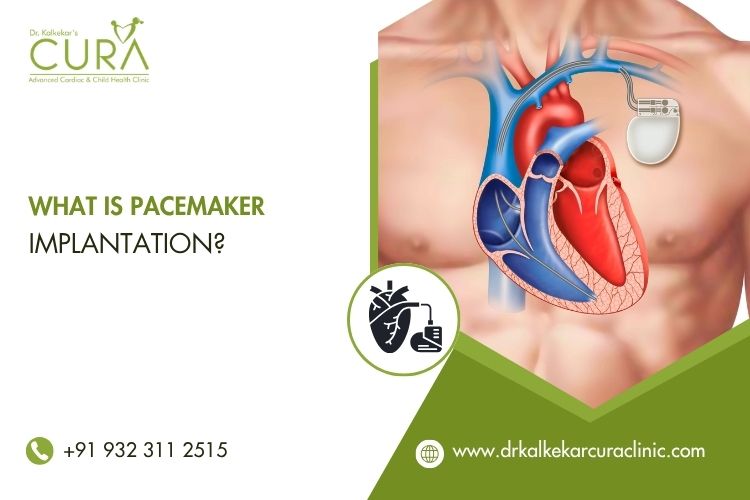
A permanent pacemaker is a small battery-powered device that continuously monitors the heart's rhythm. When it detects that the heart is beating too slowly or has paused, it sends a small electrical impulse to prompt the heart to beat.
It does not take over the heart. It does not make the heart dependent on it in the way some patients fear. It simply watches and intervenes only when the heart needs a prompt. When the heart beats normally on its own, the pacemaker is silent.
A temporary pacemaker is used in emergency or short-term situations, such as after a heart attack or before surgery, when the slow heart rate is expected to resolve or when a permanent device is being planned.
| Type | When Used | How Placed |
|---|---|---|
| Temporary pacemaker | Emergency, short-term monitoring | External wire through a vein |
| Permanent pacemaker | Long-term heart block or bradycardia | Small device implanted under the skin |
| Leadless pacemaker (MICRA) | Selected cases, minimally invasive | Catheter through the groin, no chest incision |
Pacemaker Surgery Without Incision: The MICRA Difference
Traditional pacemaker implantation involves a small incision below the collarbone, a pocket created under the skin for the device, and one or two leads threaded through a vein into the heart. It is a well-established procedure with a very strong safety record, and it remains the standard approach for most patients.
The MICRA leadless pacemaker implantation is different. The device is delivered through a catheter inserted at the groin, guided directly into the right ventricle of the heart, and fixed to the heart wall. There is no chest incision, no leads, no visible lump under the skin, and significantly reduced risk of lead-related complications that can occasionally occur with traditional devices.
For appropriate patients, particularly older patients, those with limited vascular access, or those at higher infection risk, pacemaker surgery without incision offers a meaningful clinical advantage. Not every patient is a candidate for MICRA, and the decision is made based on the specific anatomy and clinical situation.
Note: The MICRA pacemaker is not suitable for every patient requiring a permanent pacemaker. Patients needing dual-chamber pacing or cardiac resynchronisation therapy require a traditional device. An interventional cardiologist in Navi Mumbai, Dr. Sanjeev Kalkekar, will assess each case individually to determine the most appropriate approach.
5 Things Patients Believe About Pacemakers That Are Not True
We hear these at almost every consultation. Clearing them up is part of the cardiac care we provide.
"My mobile phone will interfere with it." Modern permanent pacemakers are shielded against the electromagnetic fields produced by everyday devices, including mobile phones, microwaves, and induction cooktops. Normal use of a phone held to the ear or in a pocket does not affect pacemaker function. Industrial-strength electromagnetic equipment is a different matter, and we discuss that specifically with each patient.
"I can never exercise again." Most patients with a pacemaker return to normal physical activity, including walking, swimming, cycling, and exercise classes. The pacemaker supports the heart during activity by ensuring the heart rate responds appropriately to exertion. Most patients find they can do more after the device than they could before.
"Pacemaker implantation is too risky for elderly patients." Age alone is not a contraindication for pacemaker implantation. For patients whose quality of life is being severely affected by a slow heart rate, fainting episodes, or heart block, the risk of not treating is higher than the procedural risk. We assess fitness for the procedure based on the full clinical picture, not age.
"I don't feel that bad, so I probably don't need one." Bradycardia and heart block can be present without dramatic symptoms. Some patients adapt gradually to a slow heart rate and don't realize how much their activity level has quietly reduced. A 24-hour heart monitor or electrophysiology assessment often reveals a picture that differs from how the patient reports feeling day to day.
"I'll wait and see." This is the most concerning response we encounter. Complete heart block can cause sudden loss of consciousness without warning. Waiting without monitoring or treatment in a patient with documented high-degree heart block is a genuine risk. A heart specialist consultation is the appropriate response to a documented slow heart rate, not a watch-and-wait approach taken independently.
Pacemaker Battery Life and What Recovery Looks Like
Pacemaker battery life typically ranges from 7 to 15 years, depending on how frequently the device paces and the type of device used. When the battery approaches the end of its life, the generator is replaced in a straightforward procedure. The leads, if functioning well, are usually left in place.
Pacemaker implant recovery is faster than most patients expect:
- Most patients go home the day after the procedure
- Normal light activity resumes within a few days
- Driving restrictions apply for a period determined by the cardiologist and regulatory guidelines
- The arm on the implant side has some movement restrictions for four to six weeks to allow the leads to settle
- Follow-up appointments monitor device function and healing
Most patients describe the recovery as significantly easier than they anticipated.
FAQs
Is pacemaker implantation a major surgery?
It is classified as a minor surgical procedure performed under local anesthesia with sedation in most cases. It does not involve opening the chest, stopping the heart, or general anesthesia in standard cases. Most patients are discharged within one to two days.
How risky is pacemaker implantation?
The procedure has a well-established safety profile with a low complication rate in experienced hands. Risks include infection, lead displacement, and bleeding, all of which are uncommon and manageable. The risk of the procedure is significantly lower than the risk of leaving symptomatic bradycardia or heart block untreated.
What is the most common reason for pacemaker implantation?
Complete or high-degree heart block and sick sinus syndrome are the most frequent indications. Both conditions involve failure of the heart's electrical system to maintain an adequate heart rate, leading to symptoms that affect quality of life and carry the risk of sudden cardiac events.
How many years can a person live with a pacemaker?
A pacemaker does not shorten life. For patients with symptomatic bradycardia or heart block, it restores normal quality of life and, in many cases, improves long-term outcomes. Pacemaker battery life of seven to fifteen years means the device is replaced rather than removed, and patients routinely live for decades after their first implant.
A Word From Our Team
Pacemaker implantation is a decision that deserves a proper conversation, not a rushed one. At Dr. Kalkekar's Cura Clinic, Dr. Sanjeevkumar Kalkekar, an interventional cardiologist in Navi Mumbai, takes the time to explain exactly what is happening with the heart, why the device is being recommended, what the procedure involves, and what life looks like afterward.
If you or someone in your family has been told they may need a pacemaker, or if a slow heart rate, fainting, or unexplained fatigue has been a concern, cardiac care begins with the right conversation. We're here to have it.
Visit:
Name: Dr. Kalkekar's CURA Advanced Cardiac & Child Health Clinic
Address: New Horizon CHS, Plot no. 1,2 & 3, near Navratna Restaurant, Sector 46, Seawoods, Navi Mumbai, Maharashtra 400706
Phone: +91 9323112515