

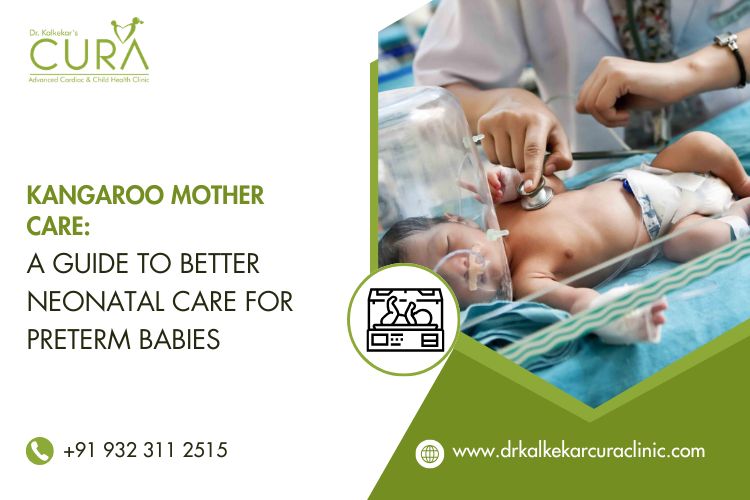
Kangaroo Mother Care: A Guide to Better Neonatal Care for Preterm Babies
The first few days after birth are filled with new emotions for every parent. When a baby arrives a little early or needs extra support after delivery, families often find themselves learning new routines around feeding, sleep, warmth, and growth much sooner than expected.
During this phase, parents are introduced to important aspects of premature infant care and newborn intensive care, including feeding schedules, weight monitoring, and temperature support. It can feel unfamiliar at first, especially when caring for very small babies.
At Dr. Kalkekar's Cura Clinic, Dr. Shruti Kalkekar often reminds parents that even small moments of closeness can play a meaningful role in recovery. One of the most comforting and effective parts of modern neonatal care is surprisingly simple:
Holding your baby close.
Kangaroo Mother Care has become an important part of neonatal care in Seawoods because it supports warmth, feeding, bonding, and overall recovery in premature babies. For many parents, this gentle method becomes the first real moment of confidence after a difficult delivery.
What Is Kangaroo Mother Care?
Kangaroo Mother Care, often called KMC, is a method where the baby is placed upright against the parent’s bare chest using direct skin-to-skin contact.
The baby usually wears:
- A diaper
- A cap
- Socks if needed
The rest of the body stays against the parent’s chest for warmth and comfort.
This method is widely used in:
- Preterm baby care
- Low birth weight baby care
- Hospital newborn care
- Recovery support after preterm birth
KMC is not simply cuddling. It is a medically recommended part of neonatal health support that helps stabilize fragile babies naturally.
Why Preterm Babies Need Extra Support?
Babies born early often struggle with basic body functions because their organs are still developing.
Common challenges include:
- Difficulty maintaining body temperature
- Feeding difficulties
- Weak immunity
- Irregular breathing
- Slow weight gain
This is why newborn intensive care and continuous observation become necessary.
During premature baby care, doctors carefully monitor:
- Breathing
- Heart rate
- Feeding
- Weight gain
- Sleep cycles
At our center for neonatal care in Seawoods, we regularly combine medical treatment with Kangaroo Mother Care because both work together to improve comfort and recovery.
How Skin-to-Skin Contact Helps?
A parent’s chest naturally helps regulate the baby’s body functions.
Direct skin-to-skin contact supports:
- Better heartbeat stability
- Improved sleep
- Calm breathing
- Better infant temperature regulation
- Stronger emotional connection
Many parents are surprised to learn how quickly babies settle during KMC sessions.
When combined with other fragile infant care practices, this closeness reduces stress and improves comfort significantly.
The Emotional Side of Newborn Bonding
Parents of premature babies sometimes feel emotionally distant during NICU stays because machines and medical routines take over daily care.
KMC changes that experience.
The baby hears the parent’s heartbeat, breathing sounds, and familiar voice patterns. This creates stronger newborn bonding during a stressful time.
At Dr. Kalkekar's Cura Clinic, Dr. Shruti Kalkekar often encourages both mothers and fathers to participate in Kangaroo Mother Care because emotional connection also plays a major role in premature baby development.
The 5 Components of Kangaroo Mother Care
KMC is not only about holding the baby.
The method usually includes five important components:
|
Component |
Purpose |
|
Skin-to-skin contact |
Helps warmth and bonding |
|
Exclusive breastfeeding |
Supports nutrition |
|
Early discharge when stable |
Reduces unnecessary hospital stay |
|
Follow-up monitoring |
Tracks the baby’s growth |
|
Family involvement |
Builds confidence in care |
These steps support safer infant clinical care and better long-term outcomes.
What Is the Minimum Duration for Kangaroo Mother Care?
Longer sessions are generally more beneficial.
Doctors often recommend:
- At least 1 to 2 hours per session
- Multiple sessions daily if possible
Short sessions may disturb the baby repeatedly because frequent movement interrupts sleep and temperature stability.
In many hospitals, newborn care settings encourage parents to gradually increase KMC duration as the baby stabilizes.
How Kangaroo Mother Care Supports Breastfeeding?
Feeding is one of the biggest concerns in preterm baby care.
Premature babies may:
- Tire easily while feeding
- Have weak sucking reflexes
- Need support learning to breastfeed
Regular skin-to-skin contact helps improve feeding instincts naturally.
Benefits include:
- Better milk production
- Easier latching
- More successful feeding sessions
This becomes especially helpful while breastfeeding premature babies, where patience and repeated attempts are often necessary.
Temperature Control in Premature Babies
One major problem in low birth weight baby care is poor body heat regulation.
Small babies lose warmth quickly because:
- Their body fat is minimal
- Skin is thinner
- Heat escapes faster
KMC supports natural infant temperature regulation by using the parent’s body heat as a warm environment.
This reduces the risk of:
- Cold stress
- Low sugar levels
- Breathing problems
Even inside neonatal intensive care, Kangaroo Mother Care is often encouraged whenever medically appropriate.
Babies Who Benefit Most From KMC
KMC is commonly recommended for:
- Babies born early after preterm birth
- Low birth weight babies
- Stable NICU babies
- Babies recovering from infections
- Babies with feeding difficulties
Some medically unstable babies may still require continuous neonatal intensive care support before KMC can begin safely.
The pediatric team decides timing based on the baby’s condition.
What Parents Usually Feel During the First Session?
The first KMC session is emotional for many families.
Parents often describe:
- Fear initially
- Relief after holding the baby
- Increased confidence
- Strong emotional connection
For mothers recovering after delivery, this closeness also reduces stress and anxiety.
During early newborn medical care, emotional reassurance matters as much as physical treatment.
Common Myths About Kangaroo Mother Care
“The baby is too fragile to hold”
In medically stable babies, KMC is actually encouraged as part of baby health support.
“Only mothers can do it”
Fathers can also safely provide Kangaroo Mother Care.
“Machines are more effective”
Technology helps with monitoring, but human contact remains essential in premature infant care.
“The baby may stop breathing”
KMC is done under medical guidance and monitoring when needed.
Simple Tips for Parents During KMC
A few practical steps make sessions smoother:
Wear front-open clothing
This allows easier positioning.
Sit comfortably
Use pillows or a reclining support.
Keep the baby upright
The baby’s head should remain slightly turned.
Stay calm
Babies often respond to the parent’s relaxed breathing.
These small steps improve comfort during fragile infant care practices.
Signs That the Baby Is Responding Well
Parents usually notice:
- Better sleep
- Improved feeding
- Stable warmth
- Calm breathing
- Gradual weight gain
These positive changes support healthier premature baby development over time.
When Kangaroo Mother Care May Be Delayed?
Some babies need temporary stabilization first.
KMC may be postponed if the baby:
- Requires ventilator support
- Has severe breathing difficulty
- Needs emergency treatment
- Has unstable blood pressure
Even in such situations, the medical team gradually introduces KMC once it’s safe.
Why Parents Need Guidance Too?
Many parents feel overwhelmed during hospital newborn care because every instruction feels unfamiliar.
At Dr. Kalkekar's Cura Clinic, we spend time helping families understand:
- Safe baby handling
- Feeding support
- Hygiene
- Sleep patterns
- Follow-up visits
Good neonatal care includes guiding parents, not just treating babies.
Kangaroo Mother Care After Hospital Discharge
KMC does not stop after leaving the hospital.
At home, continued sessions help:
- Weight gain
- Better feeding
- Emotional comfort
- Healthy sleep routines
Parents caring for low birth weight babies often continue KMC for several weeks after discharge.
FAQs
What are the 4 essentials of neonatal care?
The four essentials include warmth, feeding, hygiene, and monitoring. These are especially important during premature infant care and early newborn medical care. Proper support helps babies adjust safely after birth.
What are the 3 levels of neonatal care?
The three levels include basic newborn care, special care nursery support, and neonatal intensive care. Higher levels are used for babies needing advanced monitoring or breathing support. Premature babies often require specialized observation.
What are the 5 initial steps of newborn care?
The first steps include drying, warming, airway support, feeding assessment, and monitoring vital signs. These steps form the foundation of safe hospital newborn care. Early observation helps detect complications quickly.
What are the 7 reflexes of a newborn?
Common newborn reflexes include sucking, rooting, grasping, Moro reflex, stepping reflex, tonic neck reflex, and Babinski reflex. Doctors assess these during infant clinical care to evaluate neurological development. These reflexes gradually change as babies grow.
What are the 7 danger signs in a newborn baby?
Danger signs include poor feeding, breathing difficulty, fever, low temperature, bluish skin, unusual sleepiness, and seizures. Babies showing these symptoms need immediate medical attention. Early intervention is critical in preterm baby care.
What is a normal newborn breathing rate?
A healthy newborn usually breathes around 30 to 60 times per minute. Premature babies may show slight variations depending on their maturity and health condition. Doctors monitor breathing carefully during newborn intensive care.
Small Moments That Build Stronger Beginnings
For parents of premature babies, the NICU journey can feel overwhelming at first. Machines, monitors, and medical updates quickly become part of daily life. But even within advanced neonatal care, some of the most meaningful healing begins with simple skin-to-skin contact.
Kangaroo Mother Care supports warmth, feeding, newborn bonding, and healthy premature baby development in a natural way. At Dr. Kalkekar's Cura Clinic, we have seen how consistent neonatal health support, combined with family involvement and gentle guidance, helps both babies and parents grow stronger together.